Author: Mike Sikar

  • 20 personal finance rules to live by

    20 personal finance rules to live by

    Home › Blog › 20 money rules

    Money habits

    20 personal finance rules to live by

    Twenty money rules I have learned from 18 years of advising high earners. Simple to read, harder to follow.

    General information only, not personal advice.

    I wrote the first version of these rules years ago. They have held up through COVID, rate rises and more than one tech share crash.

    Here they are, updated for 2026. Most of them apply whatever you earn. A few matter most on a high income.

    1. Write the plan down.

    The biggest reason people don’t reach their goals is that they never set them. If you keep earning more without getting ahead, check your financial thermostat. A plan on paper beats a good intention.

    2. You don’t have to be rich to invest. You have to invest to get rich.

    3. Market falls are normal.

    Volatility is the price you pay for higher long term returns. Expect a big fall every few years.

    4. Tax and investing go together.

    Tax deductible investment debt can cut your tax while it builds your wealth, which is why tax planning and investing belong in the same plan.

    5. Grow your assets, not just your income.

    A pay rise is taxed at 47%. Growth in a well structured portfolio can be taxed far less.

    6. Super is the best structure for tax free income.

    Once you retire after 60, income from super can be tax free.

    7. A dollar saved beats a dollar earned.

    On the top rate, you have to earn almost two dollars to keep one.

    8. Your results are decided in the wild times.

    What you do when markets crash matters more than anything you do when they are calm.

    9. Losses hurt twice as much as gains feel good.

    Know that about yourself, and don’t take risks you don’t need.

    10. Watch less financial news.

    There is an inverse relationship between investment returns and time spent watching the market. It’s one reason my investment philosophy avoids market timing.

    11. Get rich quick and get poor quick are the same thing.

    12. Your home is also your biggest lever.

    The equity in your home can build an investment portfolio, when it is structured properly.

    13. Keep some cash ready.

    Volatility creates opportunity, but only if you have money ready to use.

    14. Turn bad debt into good debt.

    Debt recycling converts your home loan into tax deductible investment debt over time. Watch how debt recycling can fast track your mortgage.

    15. Don’t fight over property versus shares.

    Over the long run, with a disciplined approach, both have produced strong returns. Use both.

    16. Savings build wealth, not salary.

    A big income with no savings plan builds very little. Discipline matters at every income.

    17. Let compounding do the heavy lifting.

    Start early, stay invested, and reinvest the returns.

    18. Use the rule of 72.

    Divide 72 by your expected return to see how long it takes to double. At 8% a year, about 9 years.

    19. Expect the unexpected.

    Keep a cash buffer, the right insurance and access to a line of credit.

    20. Think in decades.

    Most people overestimate what they can do in one year, and underestimate what they can do in ten.

    Putting the rules to work

    Rules only help when they are built into a plan. That is what my Early Retirement Blueprint does: one plan for your income, RSUs, super, home equity and tax.

    Want to start reading? The free Lifetime Income Playbook puts many of these rules into practice. Or book a call below.

    Create an income for life

    Find out how to put these rules to work.

    15 minutes. No cost, no obligation. Not ready yet? Start with the free Lifetime Income Playbook.

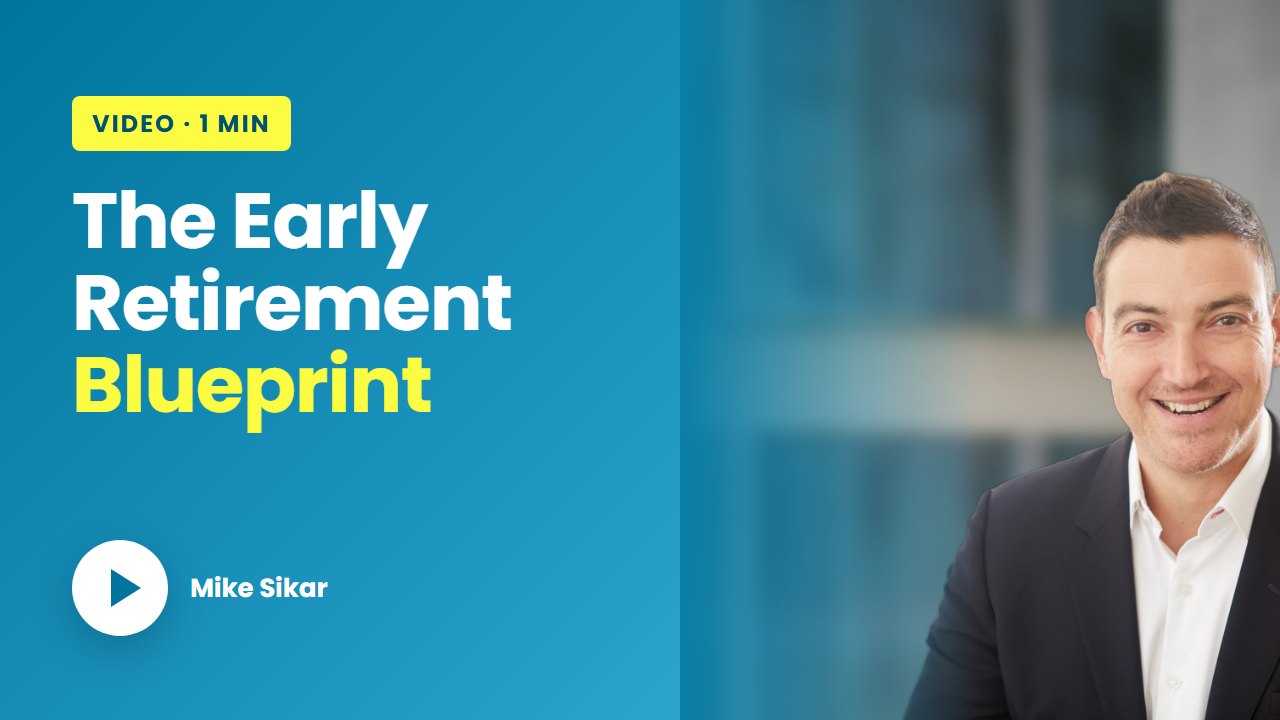
  • Early Retirement Blueprint: How Tech Execs Turn RSUs and Home Equity Into $15K to $25K a Month

    Early Retirement Blueprint: How Tech Execs Turn RSUs and Home Equity Into $15K to $25K a Month

    Home › Videos › The Early Retirement Blueprint

    Video · 1 minute

    Early Retirement Blueprint: How Tech Execs Turn RSUs and Home Equity Into $15K to $25K a Month

    You have built the wealth. The Blueprint turns it into income you can live on, without waiting until 65.

    General information only. Not personal advice.

    You have worked hard. You have climbed the corporate ladder. As a senior tech executive, you earn a high salary. You manage Restricted Stock Units, a super account, and some other investments. You have built a strong financial base. But what comes next? Many people in your position face a common problem. They lack a clear plan. They do not know how to turn their wealth into regular income. They worry about timing, taxes, and how all the pieces fit together. This video explains a solution designed specifically for you.

    Why a simple plan is not enough

    You might think your financial future is secure. With a high income and several assets, it seems safe. But this safety is often an illusion. The real challenge is not just having wealth. The real challenge is converting that wealth into usable, sustainable income.

    Many senior tech professionals feel unsure. They ask themselves hard questions. Can I step away from my career early? How do I use my home equity? What is the best way to handle my RSUs and taxes? Without clear answers, they stay in jobs they are ready to leave. They delay their dreams because the financial path is not clear.

    Uncertainty is the biggest barrier to early retirement.

    What successful tech executives are doing differently

    Hundreds of senior tech professionals have found a better way. They work at top companies. These include Google, Nvidia, Atlassian, CrowdStrike, and Salesforce. They have moved from feeling unsure to having confidence. They now know exactly how to make their next move.

    They did not do this alone. They followed a structured plan. This plan is called the Early Retirement Blueprint for Tech Execs. It is not a general guide. It is a personalised strategy. It shows you how to use every part of your financial picture.

    The goal is clear: create a steady monthly income. The target is between $15,000 and $25,000 a month. It must be sustainable and tax-efficient. Most importantly, you should not have to wait until age 65. You should not have to lower your standard of living.

    The four core parts of your financial picture

    The blueprint focuses on turning your key assets into income. These assets are often separate in your mind. The plan connects them into one working system.

    1. Your Home Equity: This is often your largest single asset. It is usually just sitting there. A good plan shows you smart ways to access this value. You can use it to create income without selling your home.
    2. Your Restricted Stock Units (RSUs): RSUs come with complex rules. You need to know the best time to sell. You must understand the tax impact. A strong strategy helps you convert these shares into cash in the smartest way.
    3. Your Super Account: This money is meant for your future. But you may want to use it before the official retirement age. The right plan outlines the rules and options. It shows you legal and efficient ways to access these funds early.
    4. Your Other Investments: You might have stocks, bonds, or other accounts. These need to work together with your other assets. They should provide growth and income at the same time.

    Turning complexity into a clear monthly income

    The magic happens when these parts work together, and retirement income modelling is how we test it. Alone, each piece has its own problems and rules. Together, they can create a powerful income engine. This engine can fund your life for decades.

    The blueprint provides a personalised map. It answers the critical “how” and “when.” For example, it might show you how to use home equity to cover costs for a few years. This allows your RSUs more time to vest under ideal conditions. You then sell them when the tax rate is lowest.

    Or, it might detail how to structure withdrawals from your super. You can combine them with investment income. This creates a steady cash flow that the tax office looks upon favourably.

    The result is not just a number on a page. It is a clear, actionable plan. You will know which lever to pull first. You will know what to do next year and the year after. This replaces guesswork with confidence.

    The difference between worry and freedom

    Let us look at the two paths a tech executive can take.

    The path of uncertainty:

    • You stay in your role longer than you want.
    • You feel stressed about financial decisions.
    • Your assets are not working together for you.
    • You delay your personal goals and family time.
    • You risk making a costly tax mistake.

    The path of the blueprint:

    • You have a defined date for your next chapter.
    • You make financial choices with confidence.
    • All your assets are part of a coordinated plan.
    • You gain time and freedom for what matters most.
    • You keep more of your money by being tax-smart.

    The people who use this blueprint move from the first path to the second. They stop asking “Can I do this?” They start saying “Here is my plan to do this.”

    Who this blueprint is really for

    This plan is designed for a specific person. You are a senior leader in the technology industry. Your total compensation is $400,000 or more per year. Your wealth is not just in cash. It is locked in company stock, property, and retirement accounts.

    You are successful, but you are not a full-time finance expert. You do not have hours each week to manage complex strategies. You need a clear outline built for your situation. You want a professional process that has been tested with people just like you. People at the very companies where you work.

    If you see yourself in this description, then generic financial advice will not work. Your situation is special. It needs a special solution. It’s the starting point for the retirement planning I do with tech executives.

    Conclusion

    Building wealth is one challenge. Using that wealth to buy your freedom is another. For high-earning tech executives, the second challenge is often harder. You have more pieces to manage and more rules to follow.

    The Early Retirement Blueprint for Tech Execs exists to solve this problem. It transforms confusion into a clear step-by-step plan. It turns your home equity, RSUs, super, and investments into a monthly income you can live on. This income is designed to be sustainable and tax-efficient.

    You have worked hard to get to this point in your career. Now you can plan just as hard for the next phase of your life. The goal is to move from earning a high salary to enjoying a rich life. You do not have to wait for a standard retirement age. With the right plan, you can make your next move on your own terms.

    Hundreds of your peers have already made this transition. They moved from uncertainty to confidence. They gained clarity on their financial future. You can do the same. The first step is to see what a personalised blueprint looks like for you.

    The Blueprint is built with you in 30 days, and your fee is backed by a 100% money back guarantee. See how it works, start with the free Lifetime Income Playbook, or book a call below.

    Create an income for life

    Like what you see? Let’s talk about your plan.

    15 minutes. No cost, no obligation. Not ready yet? Start with the free Lifetime Income Playbook.

  • Debt Recycling: Turn Your Mortgage Into a Wealth Building Engine

    Debt Recycling: Turn Your Mortgage Into a Wealth Building Engine

    Home › Videos › Debt recycling

    Video · 2 minutes

    Debt Recycling: Turn Your Mortgage Into a Wealth Building Engine

    Paying off your mortgage reduces debt. Debt recycling reduces debt and builds assets. Same income, very different result.

    General information only. Not personal advice.

    You can still borrow to invest in ETFs, and the interest is still 100% tax deductible. The 2026 Budget changes to negative gearing only apply to established residential property. See what changed.

    debt recycling is one of the most misunderstood strategies in personal finance, and for a lot of homeowners, it can completely change the way wealth gets built. Most people spend decades pouring money into their mortgage and assume that means they are investing. In reality, they are usually just reducing debt.

    There is nothing wrong with paying down your home loan. The problem is that debt reduction on its own is slow. It improves net worth, but it does not create an income-producing asset at the same time. Debt Recycling changes that by using home equity to build an investment portfolio while your mortgage continues to shrink.

    That is the key shift. Same income. Very different result.

    Why paying off a mortgage is not the same as investing

    A family home is typically a non-deductible debt attached to an asset that does not produce income. When extra cash goes toward that loan, the debt falls, which is good, but no separate investment asset is being created alongside it.

    So while net worth may slowly rise, the growth is limited to one side of the equation. You are reducing a liability, but not building a portfolio that can compound over time.

    That is where debt recycling stands apart. Instead of using your money for only one purpose, the strategy aims to:

    • reduce bad debt on your home
    • convert part of your borrowing into tax-deductible investment debt
    • build a diversified asset base at the same time

    What debt recycling actually is

    At its core, debt recycling is a tax-aware wealth strategy. You use available equity in your home to establish a separate investment loan, then invest those funds into income-producing assets such as diversified ETFs.

    The important point is that this investment loan is kept separate from the home mortgage. That separation matters because the purpose of the borrowed funds determines whether the interest may be tax deductible.

    A typical structure looks like this:

    1. Create a separate investment loan against usable home equity.
    2. Use those borrowed funds to invest in a diversified portfolio.
    3. Claim the interest on that investment loan as a tax deduction, where applicable.
    4. Continue reducing the non-deductible home loan while the portfolio has the chance to grow over time.

    That is why debt recycling is often described as turning your mortgage into an investment vehicle.

    An example of debt recycling with a $1 million investment loan

    Here is the simple maths behind the strategy using the example provided.

    Assume you set up a separate $1 million investment loan secured against your home equity. The full loan is not part of your home mortgage. It stands alone and is used only for investing.

    Now assume those funds are directed into a diversified portfolio made up of Australian and international ETFs.

    If the interest rate on that loan is 6%, the annual interest cost is:

    • $60,000 per year

    Because the borrowed money is used for investment purposes, that interest may be tax deductible. At a marginal tax rate of 47%, the tax benefit would be roughly:

    • $28,000 per year in tax savings

    That means the effective net cost of controlling a $1 million portfolio becomes:

    • $32,000 per year
    • just over $2,500 per month

    This is the part many people miss. They look only at the gross interest cost and stop there. But with debt recycling, the after-tax cost can be very different from the headline number.

    Why the separate loan structure matters

    One of the most important details in debt recycling is keeping the investment borrowing separate from your home loan.

    This is not just an admin detail. It is central to keeping the strategy clean and workable. If borrowed money is mixed together for personal and investment purposes, things become messy quickly. A dedicated loan facility makes it easier to track the purpose of the funds and maintain the tax treatment of the interest.

    That clean structure also makes risk management more practical because you can control how and when the investment funds are drawn down.

    What if the market drops right after you start?

    This is the first question almost everyone asks, and it is a fair one.

    What happens if you set up the strategy and markets fall soon after? The answer is that debt recycling does not need to mean pushing the entire loan into the market all at once.

    A more cautious approach can be used.

    Using the same $1 million facility, you might begin by investing only $250,000 on day one. The remaining $750,000 stays available in the loan facility as a buffer.

    From there, you gradually invest the rest over time, for example by drawing down:

    • $30,000 per month
    • over roughly 25 months

    This is a form of dollar cost averaging. Instead of trying to guess the perfect entry point, you spread purchases across time.

    If markets fall during that period, you are not just suffering a drop. You are also buying more units at lower prices. That can improve long-term positioning as the portfolio builds.

    How the buffer helps manage risk

    The unused portion of the facility acts as a buffer while the portfolio is being established. That gives the strategy more flexibility and helps avoid the pressure of going all in at once.

    The buffer can also help support repayments if needed while the portfolio is still taking shape, although the preferred approach mentioned is to cover repayments from savings where possible.

    The broader point is that debt recycling is not just about leverage. It is about structure and risk control.

    That risk management comes from a combination of:

    • starting with a smaller initial investment
    • keeping a large portion of the facility undrawn as a buffer
    • investing gradually over time
    • using diversification through Australian and international ETFs

    So when people ask whether the strategy is risky, the more useful question is how the risk is being managed.

    The compounding effect that makes debt recycling powerful

    The real attraction of debt recycling is not just the tax deduction. It is the combination of tax efficiency and long-term compounding.

    Using the rule of 72, if a portfolio earns an average long-term return of 10% per year, it roughly doubles every 7 years.

    Applied to a $1 million portfolio, that looks like this:

    • Year 0: $1 million
    • Year 7: $2 million
    • Year 14: $4 million

    Now subtract the original $1 million investment loan and the result is:

    • $3 million in net gain after 14 years

    At the same time, the home loan is still being paid down and tax savings are still being generated along the way.

    That is why debt recycling can produce a completely different long-term outcome without requiring a different salary. The change comes from using the balance sheet more intelligently, not from earning more income.

    Growth after 1 July 2027 is taxed under the new CGT rules, with indexation instead of the 50% discount.

    Debt reduction versus asset creation

    This is really the heart of the strategy.

    If all spare cash goes only into the mortgage, progress tends to be linear. The debt gets smaller, but there is no separate pool of capital compounding in the background.

    With debt recycling, two things happen at once:

    • non-deductible home debt is reduced over time
    • an investment portfolio is built that may grow and produce passive income

    That dual effect is what gives the strategy its edge.

    Who debt recycling tends to suit best

    Based on the examples and positioning around this strategy, debt recycling tends to appeal most to people who:

    • have strong household income
    • own property with usable equity
    • pay a high marginal tax rate
    • want to build passive income over time
    • are looking for a more strategic alternative to simply paying down the home loan

    It is often discussed in the context of high-income professionals, business owners, and executives who are earning well but feel that too much of their cash flow is disappearing into tax and mortgage payments without creating enough long-term investment momentum. For a real example, see how a Head of Sales made $700K of home loan tax deductible.

    A few common misunderstandings about debt recycling

    You need $1 million to start

    No. The $1 million example is just that, an example. Debt Recycling can be scaled up or down depending on income, equity, cash flow, and risk tolerance.

    If markets fall, the strategy fails

    Not necessarily. A gradual investment approach, plus a buffer, means market weakness early on can actually improve the prices at which additional investments are made.

    This is just about taking on more debt

    That misses the point. The strategy is about replacing or offsetting non-deductible debt with investment debt that has the potential to be tax deductible and tied to income-producing assets.

    The tax deduction is the main benefit

    The deduction matters, but it is only one piece. The bigger driver is long-term asset growth through compounding, while your home debt continues to reduce.

    The real takeaway

    debt recycling works because it changes the job your money is doing.

    Instead of every extra dollar serving only one purpose, the strategy aims to make the same overall household cash flow work across multiple fronts. You continue improving your home loan position while also building a diversified portfolio that can grow, compound, and eventually support passive income.

    For the right person, that can mean a massive difference over a 10 to 15 year window.

    The plain version is this:

    • paying off a mortgage alone reduces debt
    • debt recycling reduces debt and builds assets
    • the tax treatment can lower the effective holding cost
    • gradual investing and buffers can help manage market risk
    • compounding is what creates the long-term upside

    That is why a mortgage does not have to be just a bill to pay. With the right structure, it can become the foundation of a serious wealth-building strategy.

    Get the free Debt Recycling Playbook for the full worked example, or read more on my debt recycling page.
    Create an income for life

    Like what you see? Let’s talk about your plan.

    15 minutes. No cost, no obligation. Not ready yet? Start with the free Debt Recycling Playbook.

  • Top 10 Strategies to Retire Early on $20K a Month: A Real Client Case Study

    Top 10 Strategies to Retire Early on $20K a Month: A Real Client Case Study

    Home › Videos › Client case study

    Case study video · 17 minutes

    Top 10 Strategies to Retire Early on $20K a Month: A Real Client Case Study

    A tech sales exec, 50, and his partner. Ten strategies, put in place in 100 days, to target $20K a month after tax.

    General information only. Not personal advice.

    For many high-income professionals, early retirement seems like a distant goal. The path is often unclear, especially when dealing with complex company shares, high tax brackets, and unoptimised investment choices.

    This case study breaks down how a real-world couple in their 40s and 50s created a clear blueprint to build a target retirement income of $20,000 per month. Here are the ten key strategies used to make this possible within just a 100-day execution window.

    Where this couple started

    The couple, aged 50 and 45, are prime examples of high-income earners who lacked financial structure:

    • Income: He works in tech sales at a US listed company, pulling a $252,000 base salary (with commissions often doubling that). His partner works as a marketing manager 3 days a week, earning $90,000. They support two children in private school.
    • Family home: Valued at $3.5 million with an $800,000 mortgage remaining ($200,000 sitting in an offset account).
    • Shares: He held a highly concentrated position in his employer’s stock through employee plans (350 vested shares, 450 unvested shares).
    • Superannuation: He had $650,000 in a balanced fund; his partner had $150,000 in a separate fund.
    • Estate plan: Their wills were completely outdated, last reviewed ten years prior.

    The problem: Despite a high combined cash flow, they felt entirely unsure about their long-term trajectory. They were paying peak marginal tax rates, and their money wasn’t working efficiently for them.

    Defining their 10-year goals

    The couple wanted true financial independence within the next decade, focusing on:

    1. Target income: A retirement income of $20,000 per month after tax, fully indexed for future inflation.
    2. Career freedom: He wanted an exit strategy from his corporate sales role to pursue lifestyle-friendly consulting or startup advisory work.
    3. Lifestyle preservation: Retaining a budget of $40,000 per year for two family holidays.
    4. Legacy and impact: Helping their children enter the hyper-competitive Sydney property market while increasing their philanthropic charitable contributions.

    The 10-point strategy for early retirement

    1. Create a clear retirement blueprint

    Before executing, you need a highly visual, maths-backed roadmap. Transitioning from a state of financial anxiety to certainty requires mapping out every moving part of your net worth against a strict timeline.

    2. Master cash flow management

    High income often masks structural overspending. To solve this, a strict, automated cash flow bucket system was implemented:

    • The structural setup: A joint cash management account was opened to capture all incoming salaries and pay out all fixed recurring bills via automated direct debits.
    • The spending bucket: A separate discretionary account received $3,000 per fortnight ($1,500 per week) to cover day-to-day lifestyle expenses like food and entertainment.
    • The result: Isolating fixed costs from lifestyle spending immediately optimised their monthly savings surplus, channelling it directly into investment vehicles.

    3. Craft an investment strategy (RSU diversification)

    Relying heavily on employer stock presents massive single-company risk. A systematic sell-down plan was put into place for his employer Restricted Stock Units (RSUs) as they vested. The proceeds were systematically reallocated into a globally diversified index portfolio to mitigate downside volatility.

    4. Leverage strategic property investment

    To hedge their equity portfolio and leverage their top-tier tax bracket, the couple engaged a specialist buyers agent to source a high-quality investment property. They targeted a property under $1.5 million in Brisbane, focusing heavily on land value, premium school catchments, and robust infrastructure growth.

    Since this plan was built: the 2026 Budget limits negative gearing on established property bought after 12 May 2026, from 1 July 2027. You can still borrow to invest in ETFs, and the interest is still 100% tax deductible.

    5. Implement debt recycling

    Instead of just paying down their home loan normally, they utilised debt recycling:

    1. Non-deductible “bad” debt on their primary residence was aggressively paid down using surplus cash.
    2. An equivalent investment line of credit was immediately redrawn against the home’s equity.
    3. This converted the debt into tax-deductible “good” debt, which was injected straight into income-producing investments.

    6. Proactively manage your tax

    High earners must optimise investment ownership. A discretionary family trust was established. This structure protects assets and allows them to legally distribute investment income to their children in future years when they enter lower tax brackets, which may significantly reduce the family’s overall tax burden.

    7. Maximise your superannuation

    Superannuation remains one of the most tax-effective structures available for long-term wealth creation:

    • Tax advantages: Inside the fund, earnings in the accumulation phase are taxed at up to 15%. Once retired after age 60, moving to the pension phase drops the tax rate on both earnings and withdrawals to 0%.
    • The action plan: The couple maximised their contributions, supplementing employer super guarantee contributions with $5,000 per month in after-tax savings. By making use of the three-year bring-forward rule (up to $390,000 per person in 2026–27), their combined $800,000 balance is projected to compound to over $3.5 million within 10 years.

    8. Conduct a risk management review

    A retirement plan is fragile without protection. His corporate group insurance was verified, while his partner’s underinsured personal policies were significantly upgraded. Crucially, their wills were redrafted to include testamentary trusts, ensuring robust asset protection and long-term tax efficiency for their children.

    9. Renovate your super fund

    An audit revealed that his $650,000 balance in his balanced fund was subjected to high legacy fees and an overly conservative asset allocation. By moving both balances to low-cost investment options aligned with a growth risk profile, they unlocked significant long-term compounding potential.

    10. Utilise detailed retirement modelling

    True peace of mind comes from data. Advanced interactive financial modelling brought all 9 prior steps together, interlocking their cash flow, investment loans, RSU vests, property growth, and super contributions. The modelling showed they are on track to reach their inflation-indexed $20,000 per month target, based on the assumptions used.

    Names and details changed for privacy. Projections are not guaranteed. Results depend on your circumstances.

    Conclusion: a plan achieved in 100 days

    By moving through this disciplined framework, the couple transformed a vague, stressful retirement aspiration into an active, highly measurable wealth engine, all within 100 days of partnering with their financial adviser.

    Achieving a high-cash-flow retirement is within reach if you coordinate your strategy across cash flow, tax, super, structures, and debt. See what the first 100 days look like in practice.

    Names and details are changed for privacy. Returns and projections are assumptions, not forecasts.

    Want to see what your plan could look like? See the Early Retirement Blueprint, browse more case studies, or book a call below.

    Create an income for life

    Like what you see? Let’s talk about your plan.

    15 minutes. No cost, no obligation. Not ready yet? Start with the free Lifetime Income Playbook.

  • 7 Proven Strategies to Cut Tax and Build Wealth (For Tech Executives)

    7 Proven Strategies to Cut Tax and Build Wealth (For Tech Executives)

    Home › Videos › 7 strategies to cut tax

    Video · 11 minutes

    7 Proven Strategies to Cut Tax and Build Wealth (For Tech Executives)

    Strong income, but does your portfolio match it? Seven strategies my clients use to build $3M or more outside the family home.

    General information only. Not personal advice.

    As a tech executive or entrepreneur, you likely earn a strong income. But does your investment portfolio match your earning power? For many, the answer is no. This gap can threaten a comfortable retirement. The good news is that with focused strategies, you can build lasting wealth.

    This guide shares seven key financial concepts. These strategies have helped many clients build at least $3 million in assets outside the family home. This creates the foundation for a secure retirement and passive income for life.

    Before we begin, this is educational information. You should seek independent financial advice for your personal situation.

    1. Use the rule of 72 and long-term compounding

    Long-term planning starts with understanding how money grows. The Rule of 72 is a simple tool. It shows how long it takes your money to double.

    Here is how it works. Divide 72 by your expected annual investment return. The answer is the number of years to double your money.

    For example, if you expect a 10% return: 72 ÷ 10 = 7.2 years. A $1 million portfolio could become $2 million in about seven years. In another seven years, it could become $4 million.

    Most tech professionals retiring in 5 to 10 years do not have enough compounding assets. You must ask a key question. Will your current portfolio trajectory fund your desired retirement lifestyle? A long-term view is essential for growth.

    2. Follow a savings plan with dollar-cost averaging

    The first step is managing your cash flow. You need a system to create regular savings. Once you have a surplus, use a strategy called dollar-cost averaging.

    This means investing a fixed amount of money on a regular schedule. You invest regardless of whether the share market is up or down. This removes the stress of trying to “time the market.”

    History shows that time in the market beats timing the market. Dollar-cost averaging gives you exposure to growth assets like shares. These offer the best potential for long-term capital growth.

    Countercyclical investing is a related concept. This means investing more during market downturns. You buy stocks at a discount. Warren Buffett is famous for this approach. Many people want to stop investing when markets fall. This is often the best time to buy.

    A practical example

    One client couple had $500,000 in superannuation between them. They committed to adding $5,000 per month using pre- and post-tax contributions. Over 13 years, with an assumed 9% return, their super grew to $3 million. At a 5% income rate, that provides $150,000 per year in passive, after-tax income.

    3. Understand the power of superannuation

    Many people have misconceptions about super, and good superannuation advice clears most of them up. Government rule changes cause some to neglect it. This is a mistake. Superannuation is one of the most tax-effective structures for creating lifetime income.

    How super tax benefits work

    • While working: Your super is in an “accumulation” account. Investment earnings are taxed at up to 15%. This is much lower than the top marginal tax rate of 47%.
    • From age 60: Once you reach preservation age (60) and retire, you can start a pension. Withdrawals from your super pension are tax-free. Investment earnings inside the pension are also taxed at 0%.

    It is hard to beat 0% tax. That is why it is vital to maximise your super contributions.

    Know your super contribution caps

    You need to use your contribution limits each year. These are the caps for 2026–27, according to the ATO.

    • Concessional contributions: These are pre-tax contributions. The cap is $32,500 for 2026–27. This includes your employer’s compulsory contributions. If your total super balance was under $500,000 on 30 June last year, you may be eligible for “catch-up” contributions. You can use unused caps from the past five years.
    • Example: Use a large catch-up contribution to offset a big Capital Gains Tax (CGT) bill from selling an investment property.
    • Non-concessional contributions: These are after-tax contributions. The cap is $130,000 for 2026–27. You may also be able to use the “bring-forward” rule. This lets you contribute up to three years’ worth ($390,000) in one go, depending on your total super balance.
    • Example: A couple sold their business. Using concessional and non-concessional caps, plus the bring-forward rule, they put over $1 million into super in a short time.

    4. Get your asset allocation right

    There is no perfect asset allocation for everyone. But deciding how to split your money is a critical choice. It balances growth assets and defensive assets.

    • Growth assets: Shares and property. These aim for higher long-term returns but come with more volatility.
    • Defensive assets: Bonds, cash, and fixed income. These are less volatile but offer lower growth potential.

    Your personal risk profile guides this decision. Review it every six months. Life changes, so your investments should too.

    Many tech professionals hold too much wealth in cash. This money could work harder in growth assets. Over the last 100 years, shares and property have outperformed bonds and cash over the long term.

    Six simple investment principles

    1. The market goes up more than it goes down.
    2. Sometimes it goes down regularly (historically every 4 to 5 years).
    3. Sometimes it goes down a lot.
    4. Historically, it has always recovered.
    5. It is very hard to predict short-term moves.
    6. Over the long term, growth has been far more consistent than in any single year.

    Stay committed to your long-term strategy.

    5. Reduce tax to build wealth faster

    High-income earners often miss tax minimisation chances. This happens through poor investment structures and strategies.

    An investment structure refers to legal ownership. Examples are:

    • Individual ownership
    • Partnerships
    • Trusts (including family trusts)
    • Super funds
    • Companies

    Each structure offers different advantages:

    • Super: Offers reduced tax rates (up to 15% on earnings, 0% in pension phase).
    • Family trust: Allows income to be distributed between family members.
    • Company: Pays a flat tax rate (30%, or 25% for eligible base rate entities).

    An investment strategy is what you do within that structure. For example, you might invest in property for negative gearing tax benefits while seeking long-term growth. Aligning structure and strategy is key to keeping more of your returns.

    You can still borrow to invest in ETFs, and the interest is still 100% tax deductible. The 2026 Budget changes to negative gearing only apply to established residential property.

    6. Accelerate wealth with debt recycling

    Two common questions are: “How do I pay off my home loan faster?” and “How do I build passive income?” Debt recycling can address both.

    Traditionally, people pay off their home before investing. This shortens the time for investments to grow before retirement.

    Debt recycling works like this:

    1. You direct all extra cash (bonuses, commissions, tax returns) to pay down your non-deductible home loan. This builds equity faster.
    2. You then take out a new, separate investment loan against that increased home equity.
    3. You use the investment loan to buy growth assets like shares or ETFs. The interest on this loan is generally tax-deductible.

    This process turns non-deductible debt into deductible debt. It speeds up home loan repayment while building an investment portfolio. This creates the assets you need for retirement income.

    7. Manage employee share schemes and RSUs wisely

    Employee shares and Restricted Stock Units (RSUs) are a major part of tech wealth. You must manage them proactively.

    First, understand your vesting schedule. RSUs typically vest over 3 to 4 years. Tax is payable as they vest. You need a plan for this tax bill.

    Second, align RSU proceeds with your goals. Use the money for retirement savings, home renovations, or education. Make your RSUs work for your milestones.

    Third, explore tax-effective structures. Depending on your scheme, you might transfer shares to a lower-income spouse or a family trust. This can help manage future Capital Gains Tax.

    Fourth, avoid having too much wealth in one stock. Your company shares already represent a big risk. If the tech sector corrects, your wealth drops. When you participate in share purchase plans, you may buy more at a discount. This increases your concentration risk.

    Consider diversifying. Use sale proceeds to:

    • Build a diversified share or ETF portfolio.
    • Make extra contributions to super.
    • Pay down your mortgage to improve borrowing power for other investments.

    From 1 July 2027, the 50% CGT discount is replaced with indexation and a 30% minimum tax on real gains, so plan your sell down with both sets of rules in mind.

    Turning knowledge into action

    Personal finance is 80% behaviour and 20% strategy. Knowing what to do is not enough. You must take action.

    Comfortable inaction will not lead to a successful retirement. These seven strategies provide a clear roadmap. They have helped many clients build $3 million or more in assets outside the family home. This creates the passive income needed for a secure, lifelong retirement.

    Your situation is unique. A tailored plan makes all the difference.

    Ready to apply these strategies? You can book a free 15-minute strategy call to discuss your options. There is no cost or obligation. Let’s start building your income for life.

    Read the full article, 7 strategies to reduce tax and build wealth, or book a free 15 minute call below.

    Create an income for life

    Like what you see? Let’s talk about your plan.

    15 minutes. No cost, no obligation. Not ready yet? Start with the free Lifetime Income Playbook.

  • Mortgage Repayments vs Superannuation Contributions: How to Choose

    Mortgage Repayments vs Superannuation Contributions: How to Choose

    Home › Videos › Mortgage vs super

    Video · 1 minute

    Mortgage Repayments vs Superannuation Contributions: How to Choose

    Got spare cash? Paying down the mortgage and topping up super are both good moves. There’s also a third option, debt recycling, which lets you reduce the home loan and invest at the same time. Here is how to decide.

    General information only. Not personal advice.

    You have some extra money. This is a great position to be in. A big question now faces you. Should you use that money to pay down your mortgage faster? Or should you put it into your superannuation to grow your retirement savings? This choice can feel hard. Both options are smart in their own way. This guide will break down the pros and cons of each path. We will look at how your age, income, and goals should shape your choice. By the end, you will have a clearer idea of the best move for your financial future.

    The case for paying down your mortgage faster

    Paying extra money into your home loan has clear benefits. It is a simple and powerful strategy. Let’s look at why this might be the right choice for you.

    You lower your total debt quickly

    Every extra dollar you put into your mortgage reduces the principal. The principal is the original amount you borrowed. A smaller principal means you pay less interest over the life of the loan. This can save you tens of thousands of dollars.

    You can own your home sooner

    Making extra payments shortens your loan term. You could own your home years earlier. This brings incredible peace of mind. Imagine having no mortgage payment years before you retire.

    The benefit is guaranteed and immediate

    Paying off debt gives you a guaranteed return. That return is equal to your mortgage interest rate. If your loan rate is 6%, paying it off is like earning a risk-free 6% return. This result is immediate and certain.

    It frees up your cash flow sooner

    Once your mortgage is paid off, that monthly payment disappears. You free up a large part of your budget. You can then use that money for other goals, like travel or investing.

    The power of boosting your superannuation

    Putting extra money into your super is another strong option. Superannuation has unique advantages that can make your money grow faster over the long term.

    Super benefits from compound growth

    Super is a long-term investment. Money you add now has decades to grow. The returns on your investment then earn their own returns. This is called compound interest. Over 20 or 30 years, this effect is huge. A small extra contribution now can become a much larger sum at retirement.

    You get attractive tax benefits

    Contributions to your super fund are often taxed at a lower rate than your income. This is one of the biggest perks of super. Putting money into super can reduce your tax bill now. It also lets more of your money stay invested and grow for your future.

    It builds a bigger retirement nest egg

    The main goal of super is to fund your retirement. Adding more to it today directly increases your comfort later. A larger super balance means more options and security when you stop working.

    How to choose: key factors to consider

    There is no single answer for everyone. The best choice depends on your personal situation. Here are the key factors you must weigh.

    Factor 1: your current age and stage of life

    Your age is one of the most important details.

    • If you are younger (like in your 20s or 30s): Your super has a very long time to grow. An extra contribution now can have a massive impact due to compound interest. However, you may also have a long mortgage ahead. Paying it down early can set a strong foundation.
    • If you are middle-aged (40s or 50s): You need to balance both goals. You still have time for super to grow, but less time than a younger person. Your mortgage might be a bigger monthly burden. A mix of both strategies often works best here.
    • If you are nearing retirement (60+): Clearing your mortgage before you retire can be a top priority. It removes a major expense when your income drops. Boosting super is still good, but you have less time for growth.

    Factor 2: your mortgage interest rate

    Look at the interest rate on your home loan. Is it high or low?

    • A high interest rate (for example, above 6%) makes paying off your mortgage very attractive. The guaranteed “return” you get is higher.
    • A low interest rate might tilt the scales toward super. If your super fund’s long-term return is likely higher than your mortgage rate, investing may win.

    Factor 3: your income and tax bracket

    Super’s tax benefits are more powerful for some people than others.

    • If you are in a high tax bracket, salary sacrificing into super can give you significant tax savings. This can make super contributions very effective.
    • If you are in a lower tax bracket, the tax benefit is smaller. Paying down your mortgage might feel more straightforward.

    Factor 4: your risk comfort level

    Think about how you feel about risk.

    • Paying your mortgage is a safe, risk-free financial move. You know exactly what you are getting.
    • Investing in super involves some risk. Your super balance will go up and down with the market. Over the long term, it has grown well for most people. But you must be okay with some short-term ups and downs.

    Comparing your options: a simple summary

    ConsiderationPaying Extra on MortgageBoosting Super Contribution
    Main BenefitLower debt, less interest, own home sooner.Money grows faster for retirement with tax help.
    Financial ReturnGuaranteed, equal to your mortgage rate.Not guaranteed, but historically strong long-term.
    Tax BenefitNo direct tax benefit.Can be significant, especially for higher incomes.
    Access to MoneyHarder to access (home equity).Preserved until retirement (with few exceptions).
    Best For…People who want certainty and to reduce debt fast.People focused on long-term growth and retirement.

    A smart balance is often the best path

    For many people, the smartest plan is not to choose just one. It is to do a bit of both. This balanced approach gives you the best of both worlds.

    You get the security of lowering your mortgage debt. At the same time, you harness the growth power of your super. You can adjust the balance as your life changes. For example, you could:

    1. Split your extra cash. Put 50% toward your mortgage and 50% into super.
    2. Focus on one goal at a time. Pay down your mortgage aggressively for two years. Then switch to boosting your super for the next two years.
    3. Use financial milestones. Decide to make extra mortgage payments until you reach a certain loan balance. After that, focus on super.

    This way, you are not missing out on one key area of your financial health.

    Conclusion: making your personal choice

    The choice between your mortgage and your super is personal. It depends on your numbers and your feelings about money. Use the factors in this guide to help you decide. Ask yourself: What is my biggest goal right now? Is it being debt-free, or building a large retirement fund?

    Remember, the worst thing you can do is nothing. Using your extra cash wisely is a great step. Whether you choose mortgage, super, or a mix, you are building a stronger future.

    If your situation is complex, getting personalised advice is a great idea. A financial adviser can look at your exact income, debts, and goals. They can help you build a plan that fits your life. Take control of your extra cash today. Your future self will thank you for the careful choice you make now.

    Want to see the right mix for you? My free Lifetime Income Playbook walks through it. Or read my 10 super tips for high income earners.

    Create an income for life

    Like what you see? Let’s talk about your plan.

    15 minutes. No cost, no obligation. Not ready yet? Start with the free Lifetime Income Playbook.

  • How Debt Recycling Can Fast Track Your Mortgage and Build Passive Income

    How Debt Recycling Can Fast Track Your Mortgage and Build Passive Income

    Home › Videos › Debt recycling strategy

    Video · 3 minutes

    How Debt Recycling Can Fast Track Your Mortgage and Build Passive Income

    You don’t have to wait until the mortgage is gone to start investing. The loan setup matters, which is where a mortgage broker who understands the strategy helps. Debt recycling lets you do both at once.

    General information only. Not personal advice.

    You can still borrow to invest in ETFs, and the interest is still 100% tax deductible. The 2026 Budget changes to negative gearing only apply to established residential property. See what changed.

    Do you want to pay off your house faster and build wealth at the same time? You don’t have to wait until your mortgage is gone to start investing. A powerful strategy called debt recycling lets you do both. This method can turn your regular home loan into a tax-smart investment loan. It helps you build passive income while you work on owning your home free and clear. This video will explain how debt recycling works, who it’s best for, and how it can change your financial future.

    What is debt recycling?

    Debt recycling is a financial strategy. It aims to turn a non-deductible home loan into a tax-deductible investment loan.

    This is how it works. You use extra cash to pay down your home mortgage faster. Then, you borrow that same amount back from your bank. You use this new loan to buy income-producing investments. These can be shares, ETFs, or managed funds.

    Because this new loan is used for investment, the interest you pay may be tax-deductible. This process of paying down and re-borrowing is the “recycling” part.

    The problem debt recycling solves

    Most people wait to invest until they pay off their home. Home loans are big today. This wait can delay investing for many years.

    This delay is a problem. The gap between paying off a house and retirement is shrinking. Waiting means you miss years of potential investment growth. Debt recycling lets you start investing much earlier. You build wealth while you pay off your home.

    How debt recycling works step by step

    The process is a cycle. You repeat these steps over time.

    Step 1: make extra mortgage payments

    You use money saved for investing to pay extra on your home loan. This reduces your non-deductible debt.

    Step 2: re-borrow the equity

    You then take out a new loan or line of credit. This loan is for the same amount you just paid off. Your total debt stays the same, but its purpose changes.

    Step 3: invest the borrowed funds

    You use this new loan to buy income-producing assets. This makes the new loan an investment loan.

    Step 4: claim the tax deduction

    The interest on this investment loan may be tax-deductible. This can lower your yearly tax bill.

    Step 5: repeat the cycle

    You keep using your savings to pay down your home loan. Then, you borrow it back to invest more. Over time, your regular mortgage shrinks. Your investment loan grows.

    The end goal of this strategy

    The secret is in the shift. Your non-deductible mortgage gets smaller. Your tax-deductible investment loan gets bigger.

    In the end, you may have no regular mortgage left. You will have a single, tax-deductible investment loan. Your money is now working harder for you.

    Key benefits of debt recycling

    This strategy offers several clear advantages.

    • Start investing sooner: You don’t wait decades to begin building a portfolio.
    • Lower your tax bill: The interest on your investment loan can be a tax deduction.
    • Build passive income: Your investments can generate regular income through dividends or distributions.
    • Pay off your home faster: You can use your investment income and tax savings to make extra mortgage payments.
    • Make your debt work for you: You turn “bad” debt (home loan) into “good” debt (investment loan).

    Who is debt recycling best for?

    This is a powerful tool, but it is not for everyone. It works best for people in a strong financial position. See how one Head of Sales turned $700K of home loan into tax deductible debt.

    The ideal candidate

    Our experience shows the most successful clients fit this profile.

    1. High, stable income. You need a steady household income. It must be high enough to handle two loans. You should be able to comfortably service your mortgage and the new investment loan.
    2. Strong savings rate. You must have spare cash flow. Successful clients often save a minimum of $4,000 per month. This cash is the fuel for the recycling process.
    3. Long-term mindset. Debt recycling is a long game. You need an investment horizon of at least 7 to 10 years. This gives your investments time to grow. It also lets you ride out any market ups and downs. A longer time frame usually gives better results.
    4. Comfort with risk. You are borrowing to invest. This can increase your risk. You must be okay with market fluctuations. You should not need this invested money for daily life or short-term goals.

    If your income is not stable or your savings are low, this strategy may be too risky. It is best for those on solid financial ground.

    Important risks and considerations

    Debt recycling is not magic. Before you start, make sure your income is protected. You need to understand the risks.

    • Investment risk: The value of your shares or ETFs can go down. You could lose money.
    • Interest rate risk: If interest rates rise, your loan payments will go up.
    • Cash flow pressure: You must keep up payments on two loans. If your income drops, this can be stressful.
    • Tax rules can change: Tax laws are complex and can change, as the 2026 Budget showed. Always get advice from a qualified tax adviser.
    • It’s a long-term plan: You should not use this money for goals less than 7 to 10 years away.

    Building your debt recycling plan

    If this strategy fits your life, here is how to start.

    1. Talk to professionals. Do not go it alone. Speak with a financial adviser who knows debt recycling. Also, talk to a tax accountant. They can make sure your plan is set up correctly for your tax situation.
    2. Check your loan structure. Talk to your bank or mortgage broker. You need the right loan products. You will likely need a home loan with a redraw facility or an offset account. You will also need a separate investment loan or line of credit.
    3. Create a safety buffer. Keep a separate emergency fund. This is money you do not recycle. It covers you if you have unexpected bills or a loss of income.
    4. Choose your investments wisely. Pick investments that fit a long-term plan. Look for assets that produce a good income. Diversify across different companies or funds to spread your risk.
    5. Stay disciplined. The plan only works if you stick to it. Keep making your extra mortgage payments. Keep reinvesting the borrowed funds. Stay focused on your long-term goal.

    Conclusion: is debt recycling your path to wealth?

    Debt recycling is a smart strategy for the right person. It turns your biggest debt, your mortgage, into a tool for building wealth. It helps you pay off your home faster and build passive income streams at the same time.

    However, it requires a strong financial foundation. You need a high, stable income and a solid savings habit. You also need a long-term view and a tolerance for risk.

    If you think debt recycling could work for you, your next step is clear. Get in touch with a qualified financial adviser. They can look at your personal situation. They can help you build a plan that is safe, effective, and tailored to your goals.

    Don’t just wait for your mortgage to end. Start making your money work harder for you today.

    My free Debt Recycling Playbook has the full worked example. Or read more on my debt recycling page.
    Create an income for life

    Like what you see? Let’s talk about your plan.

    15 minutes. No cost, no obligation. Not ready yet? Start with the free Debt Recycling Playbook.

  • How to Manage Your Personal Budget

    How to Manage Your Personal Budget

    Home › Videos › Manage your personal budget

    Video · 3 minutes

    How to Manage Your Personal Budget

    Good income but struggling to save? The problem usually isn’t what you earn. It is the system. Here is the one I have used for 17 years.

    General information only. Not personal advice.

    Do you earn a good income but still struggle to save money? You are not alone. Many people find their money disappearing each month with little to show for it. The problem is often not how much you make, but how you manage it. A proven cash flow system can change that. This method uses a simple structure to take control of your finances. It helps you spend on purpose, save automatically, and build wealth over time. I have used this system for 17 years. It has helped many clients stop worrying about money and start making it work for them.

    The foundation: understanding your budget

    The first step is to see the full picture of your money. You must know what comes in and what goes out. This means tracking your total income and all your expenses.

    Start by listing all sources of money. This includes your salary, bonuses, rental income, dividends, and even tax refunds. Every dollar you receive counts.

    Next, list all your expenses. You should split them into two key categories: fixed expenses and discretionary expenses. This split is crucial for the system to work.

    Fixed expenses are bills that stay the same each month. They are often paid on a set schedule. Your mortgage or rent is a fixed expense. So are car payments, insurance premiums, and utility bills.

    Discretionary expenses are costs that can change. They are for your day-to-day life and choices. This includes money for food, dining out, entertainment, clothing, and hobbies.

    Making a basic budget in a simple spreadsheet is the best way to start. This gives you a clear map of your financial situation. You cannot manage what you do not measure.

    How the cash flow management system works

    This system uses one main bank account to organise all your money. It is called a cash management account. You should choose one with no monthly fees. All your income flows into this single account.

    From this main account, you automate your fixed expenses. Set up direct debits or automatic payments for every regular bill. Your mortgage, utilities, and subscriptions get paid on time, without you thinking about it.

    This leaves your discretionary spending. For this, you use a simple but powerful tool: a cash living allowance.

    The power of a cash living allowance

    Your cash living allowance is a set amount of money you give yourself for daily life. It is transferred from your main cash account to your personal debit card every two weeks.

    This allowance covers all your variable costs. Think of things like groceries, petrol, doctor visits, meals out, and movies. You use only this money for these expenses.

    The secret is in the separation. Your fixed bills are automated and paid. Your fun money is a fixed, clear amount. This structure teaches you to live within your means. You learn to make choices with your allowance.

    The benefits of structured cash flow

    Why does this simple system work so well? It creates clear rules for your money. This removes stress and guesswork.

    You stop overspending. When your fun money is a set amount, you become more mindful. You decide if a new shirt is worth it before you buy it. You choose between a fancy dinner or saving that money.

    You build savings automatically. After your bills are paid and your allowance is set, the money left in your main account is your ongoing surplus. This is not “extra” money. This is your investment money.

    This surplus drives your wealth-building strategy. You are not just trying to pay off a credit card each month. You are actively building a pool of money to invest.

    You gain financial power. Consistent savings give you more options. You can pay down your mortgage faster. This saves you thousands in interest. You improve your ability to borrow for good debt, like a diversified investment portfolio. You can unlock equity from your home to grow your portfolio.

    The reward from watching your savings grow and compound is far greater than the quick thrill of overspending. It creates lasting passive income.

    Implementing your own system

    Starting this system requires a small amount of setup time. The long-term payoff is huge.

    1. Create your budget. Use a simple Excel sheet or a budgeting app. List all income and all expenses. Categorise every expense as fixed or discretionary.
    2. Open your cash management account. Find a free account from a reputable bank or financial institution. This will be the hub for all your money.
    3. Automate fixed expenses. Set up automatic payments for every fixed bill you have. This ensures they are always paid on time.
    4. Set your fortnightly allowance. Look at your discretionary spending from your budget. Set a realistic amount for your two-week cash allowance. Transfer this amount from your main account to your debit card every pay period.
    5. Direct your surplus. Any money left in your main account after bills and your allowance is your surplus. Have a plan for this money. Automate a transfer to a savings or investment account.

    A realistic path to financial freedom

    Many people with strong incomes save very little. I explain why in what is your financial thermostat set for? They lack the right structure. They see their bank balance and think it’s money to spend. This system changes that mindset.

    Your main account becomes a tool, not a piggy bank. It receives money, pays necessary bills, funds your life, and channels the rest to your future.

    The motivation becomes natural. You want to stay within your allowance because you see your surplus growing. You get excited about your investment statements, not your credit card statements. Your goal shifts from “not being in debt” to “building real wealth.”

    Conclusion

    Financial success is not a mystery. It is a result of good habits and a clear system. Managing your cash flow is the most important habit you can build.

    The system outlined here is simple but powerful. It uses one central account, automated bills, and a set spending allowance. This structure turns your income into a wealth-building engine. It gives you control, reduces stress, and opens doors to future opportunities.

    You do not need a complex plan or a huge salary to start. You just need the will to take the first step. Track your money, set up your accounts, and stick to your allowance. The compound growth of your saved money will do the rest of the work.

    If you are ready to move from wondering where your money went to knowing exactly where it’s going, this system is for you. Start today. Your future self will thank you. Take control of your cash flow and build the financial future you deserve.

    Once the surplus is reliable, the bigger strategies open up. Read my cash flow management page, or get the free Lifetime Income Playbook.

    Create an income for life

    Like what you see? Let’s talk about your plan.

    15 minutes. No cost, no obligation. Not ready yet? Start with the free Lifetime Income Playbook.

  • Catch-up contributions: how to use your unused super cap

    Catch-up contributions: how to use your unused super cap

    Home › Blog › Catch-up contributions

    Superannuation

    Catch-up contributions: how to use your unused super cap

    Unused concessional cap from the last five years doesn’t have to go to waste. Here is how carry-forward contributions work, and when they are worth using.

    General information only, not personal advice.

    If your super balance is under $500,000, you may be able to put far more into super this year than the standard cap allows. Catch-up contributions (the ATO calls them carry-forward concessional contributions) let you use concessional cap you didn’t use in earlier years. For a high earner with a bonus year, a big RSU vest or a capital gain to manage, that can mean a much larger tax deduction in a single year.

    This guide covers who is eligible, how much you can contribute, the tax rules and the mistakes I see most often.

    How catch-up contributions work

    Every year you have a concessional contributions cap. Concessional contributions come from pre-tax money: your employer’s super guarantee, salary sacrifice, and personal contributions you claim a tax deduction for. Inside super they are generally taxed at 15%, rather than at your marginal rate of up to 47%.

    If your concessional contributions in a year come in under the cap, the unused amount can be carried forward and used in a later year, as long as you meet the balance test in the year you use it. Unused amounts have been counted since 2018–19, and each year’s amount is available for five years before it expires.

    The ATO uses your oldest unused amounts first, and applies them automatically once your contributions go over the general cap for the year.

    Concessional cap by year

    Financial yearConcessional cap
    2018–19 to 2020–21$25,000
    2021–22 to 2023–24$27,500
    2024–25 and 2025–26$30,000
    2026–27$32,500

    Source: ATO, concessional contributions cap.

    Who is eligible

    You can make catch-up contributions in a financial year if both of these apply:

    • Your total super balance was under $500,000 at 30 June of the previous financial year. This counts all your super accounts, including any SMSF.
    • You have unused concessional cap from one or more of the previous five financial years.

    Since 1 July 2022 there is no work test for salary sacrifice or for making personal contributions between 67 and 74. If you are 67 to 74 and want to claim a tax deduction for a personal contribution, you still need to meet the work test (40 hours of work within 30 consecutive days in the year) or qualify for the one-off exemption. See the ATO’s personal super contributions rules.

    Catch-up contributions tend to suit people whose contributions were lower in past years: career breaks, parental leave, part-time work, or years when the employer’s super guarantee was the only thing going in.

    When catch-up contributions are worth using

    The deduction is most valuable in a year when your taxable income is unusually high. Common examples:

    • A large bonus or commission year
    • Selling a block of vested shares or RSUs at a capital gain
    • Selling an investment property
    • A redundancy or other taxable lump sum
    • An inheritance you want to add to super

    In those years, a personal deductible contribution using your carried-forward cap may reduce tax at your marginal rate, while the money goes into super taxed at 15%. That’s why I look at catch-up contributions as part of year end tax planning.

    How to work out how much you can contribute

    1. Check your total super balance. It must have been under $500,000 at 30 June last year.
    2. Find your unused amounts. Your carry-forward balance is shown in ATO online services through myGov. In 2026–27, you can use unused amounts from 2021–22 to 2025–26.
    3. Add the current year’s cap. Your maximum for 2026–27 is $32,500 plus your available unused amounts.
    4. Subtract what’s already going in. Take off your employer contributions and any salary sacrifice for the year. What’s left is how much you can add as a personal deductible contribution.
    5. Lodge a notice of intent. Before you claim the deduction, give your fund a notice of intent to claim and wait for its acknowledgment.

    Tax rules to know

    Contributions tax and Division 293

    Concessional contributions are generally taxed at 15% in your fund. If your income plus concessional contributions is over $250,000, Division 293 tax adds another 15% on your concessional contributions, or on the amount over $250,000 if that is less. It depends on your income, not on whether you go over the cap, and carried-forward contributions count toward it. See the ATO’s Division 293 rules.

    Even at an effective 30%, that is still below the 47% a high earner would pay on the same income outside super.

    If you go over your cap

    Concessional contributions above your available cap are added to your assessable income and taxed at your marginal rate, less a 15% tax offset. You can elect to release up to 85% of the excess from your fund to help pay the tax. Any excess you don’t release counts toward your non-concessional cap.

    Non-concessional contributions

    Once your concessional cap is used, you may be able to add after-tax (non-concessional) contributions. The cap is $130,000 for 2026–27. These aren’t tax-deductible, and once inside super their earnings are taxed in the same way as the rest of your balance.

    Common mistakes

    • Not checking your total super balance. If it was $500,000 or more at the previous 30 June, you can’t use carried-forward amounts that year.
    • Forgetting employer contributions. They count toward the cap, so work out what’s left before you contribute.
    • Missing the notice of intent. Without a valid notice acknowledged by your fund, you can’t claim the deduction.
    • Letting amounts expire. Unused amounts last five years. In 2026–27, anything left from 2021–22 is used or lost.
    • Treating it in isolation. Super is generally preserved until you retire after your preservation age of 60. Make sure you won’t need the money sooner.

    Case study: catching up after parental leave

    Penny’s example shows how unused amounts build up. It is illustrative, uses the caps that applied in those years, and assumes her total super balance stayed under $500,000.

    In 2018–19 and 2019–20, Penny made concessional contributions of $15,000 a year, $10,000 less than the $25,000 cap. She took 12 months of parental leave from 1 July 2020 and made no concessional contributions in 2020–21.

    From 1 July 2021, Penny returned to full-time work, and her employer contributions totalled $15,000 a year in 2021–22, 2022–23 and 2023–24. That was $12,500 less than the $27,500 cap in each of those years.

    In 2023–24 Penny received a $50,000 inheritance and wanted to contribute it to super. The table shows how her unused amounts let her do that as a concessional contribution.

    Financial yearAnnual capTotal cap including carried-forward amountsConcessional contributions madeUnused amount carried forward
    2018–19$25,000$25,000$15,000$10,000
    2019–20$25,000$35,000$15,000$20,000
    2020–21$25,000$45,000$0$45,000
    2021–22$27,500$72,500$15,000$57,500
    2022–23$27,500$85,000$15,000$70,000
    2023–24$27,500$97,500$65,000$32,500

    In 2023–24, her $15,000 of employer contributions plus her $50,000 personal deductible contribution came to $65,000, well within her $97,500 available cap. She still had $32,500 to carry forward to later years.

    Take control of your super

    Catch-up contributions are one of the few ways to get a large deduction in a high-income year, but the balance test, the five-year window and the notice of intent all need to line up. For more ways to make super work harder, see my 10 super tips for high income earners. My superannuation advice service covers this as part of a full review, or book a call below.

    This information is general in nature and doesn’t take into account your personal objectives, financial situation or needs. Before acting on it, consider whether it’s appropriate for you and speak with a financial adviser.

    Create an income for life

    Find out what your super could be doing.

    15 minutes. No cost, no obligation. Not ready yet? Start with the free Lifetime Income Playbook.

  • Kick start your financial goals in 100 days

    Kick start your financial goals in 100 days

    Home › Videos › Your first 100 days

    Video · 3 minutes

    Kick start your financial goals in 100 days

    What my team and I get done in your first 100 days. From the first meeting to a plan in place.

    General information only. Not personal advice.

    This is what the first 100 days of my Personal CFO service look like. The idea is simple. Run your personal finances the way a well-run business runs its own, with a clear roadmap, a written plan and regular check-ins on progress.

    In this video

    • Getting clear on your goals and your timeline
    • Setting up a cash flow system that runs itself
    • Putting your loans, RSUs, super and investments to work
    • Getting your tax, insurance and estate plans in place

    Most people wait years to get their finances organised. We aim to get the big moves done in 100 days.

    Step 1: an intro call, then a financial roadmap meeting

    It starts with a short intro call. If it looks like we can genuinely add value to your finances, I’ll invite you to a financial roadmap meeting. We can meet in person at our Sydney office or over Zoom, whichever suits you.

    In that meeting we work out where you are today and where you want to be in 10 years. We set milestones so you can measure progress along the way, and we talk through the strategies and options that might fit.

    We also cover how working together looks: the services, what to expect from us, and our fees. You’ll know what it costs before you decide whether to go ahead.

    Step 2: your written plan, then putting it in place

    If you decide to go ahead, my team and I build your financial plan from what we learned in the roadmap meeting. Because it’s personal advice, it comes as a written Statement of Advice that explains each recommendation, why we think it suits you, and the costs and risks involved. We usually present it within 3 to 4 weeks.

    Then we help you put it into action. We prepare the paperwork and coordinate the moving parts. Where you need another specialist, I can introduce you to accountants, mortgage brokers, buyers’ agents or solicitors I work with.

    For high-income executives who are short on time, this coordination is often where the real value sits. One plan, one point of contact, and far fewer things falling through the cracks.

    Step 3: a progress review at 100 days

    At the 100-day mark we meet again. We review progress, revisit your goals and check the plan still fits. What gets done in that time depends on your situation, but for the tech professionals and executives we work with, it often includes some of the following:

    • Better cash flow management, with buffers set up for the unexpected.
    • A review of your home loan, which may mean refinancing to a sharper rate. Some people also release equity to invest. That suits some situations and not others, because borrowing to invest magnifies losses as well as gains.
    • A diversified investment portfolio across asset classes such as shares, managed funds and property.
    • A strategy for your RSUs and employee share schemes, including the tax that comes due as shares vest and how your company benefits fit in.
    • A review of your superannuation investment options and contribution strategy, within the contribution caps.
    • Assets and investments structured so they’re tax effective.
    • Insurance that protects your income and your family if you can’t work.
    • Meetings with a buyers’ agent to look at property opportunities, and with an accountant on suitable structures.
    • Detailed retirement projections showing how the recommended strategies could play out over time.

    Those projections are estimates. They rely on assumptions about investment returns, inflation and your circumstances, so treat them as a guide rather than a guarantee. We revisit them as things change.

    More confidence in your financial decisions

    The benefit isn’t only the individual actions. Clients often tell us they feel more organised and more confident about their decisions, because they know where they’re heading and why.

    The broader aims are to find legitimate ways to reduce tax, free up time for family, protect the people who rely on you, manage risk and open up new opportunities. Put simply, the goal is to help you build a more secure financial future.

    Want to see what that looked like for a real client? Watch the tech sales exec case study.

    Start with a conversation

    Your first 100 days start with a conversation about where your finances are now and where you want them to go. Book a call below, or message me on LinkedIn.

    This information is general in nature and doesn’t take into account your personal objectives, financial situation or needs. Before acting on it, consider whether it’s appropriate for your circumstances and speak with a financial adviser. Timeframes are typical and can vary. Mike Sikar and Delta Financial Group Pty Ltd are authorised representatives of Consultum Financial Advisers Pty Ltd, AFSL No. 230323.

    Create an income for life

    Like what you see? Let’s talk about your plan.

    15 minutes. No cost, no obligation. Not ready yet? Start with the free Lifetime Income Playbook.