Home › Blog › Understanding RSUs
RSUs and shares · Updated October 2026
Understanding RSUs in Australia: your complete guide
How restricted stock units are taxed, what to do when they vest, and how tech execs turn a pile of company shares into real wealth.
By Mike Sikar, Financial Adviser. General information only, not personal advice.
If you work for a global tech company, RSUs are probably a big part of your pay. For many of my clients they are worth more than their salary.
They are also the part of their pay that is managed worst. Not because people are careless. Because nobody explains how they really work.
This guide covers the lot. What RSUs are, how they are taxed in Australia, and what I help clients do with them.
What are RSUs?
Restricted stock units are a promise of company shares in the future. Your employer grants you a number of units today. They turn into real shares on set dates, as long as you are still there.
That process is called vesting. A common schedule is four years, with shares vesting every quarter or every six months.
Until they vest, you don’t own anything. Once they vest, the shares are yours, and so is the tax bill.
How RSUs are taxed in Australia
RSUs fall under the ATO’s employee share scheme rules. For most tech execs, the key rule is simple:
The market value of your shares is taxed as income at your taxing point. For RSUs, that is usually the day they vest.
Not when you sell them. When they vest. On a $200K vest at the 47% top rate, that is around $94K of tax.
Three details that catch people out
- Nobody may withhold the tax for you. Many plans don’t take the tax out the way your payslip does. The bill arrives when you lodge your return.
- The 30 day rule. If you sell within 30 days of the taxing point, the sale date becomes your taxing point. You are taxed on the sale price, and there is no separate capital gain.
- Leaving your job. For RSUs granted from 1 July 2022, leaving your employer no longer triggers the tax on unvested units. Older grants can still work differently.
What happens after vest: capital gains tax
Once your shares vest, any growth from that point is a capital gain. Your cost base is the market value on the vest date.
Until now, holding the shares for 12 months meant only half the gain was taxed. That is changing.
From 1 July 2027, the 50% CGT discount is being replaced by CPI indexation and a 30% minimum tax on real gains. It applies to shares, for individuals and trusts. Gains made before July 2027 keep the old 50% treatment.
So “hold for 12 months to save tax” is no longer a reason to keep everything. It was never a good enough reason anyway.
The real risk: concentration
Every vest adds more of the same company. Before long, half your net worth rides on one share price. And your salary comes from the same place.
Tech shares can fall hard. Atlassian, Xero and others have dropped 50% or more from their highs. If that happens while most of your wealth is in one stock, years of work can disappear.
My 33% rule
As I told the Australian Financial Review, my long term comfort level is about one third. Keep up to 33% of your vested shares if you believe in the company. Never let one stock grow beyond 33% of your net worth.
What to do when your RSUs vest
Make the decision before the vest date, not on the day. Here is the framework I use with clients:
- Set aside the tax first. Sell enough to cover it, or hold the cash aside. Never get caught at tax time.
- Apply the 33% rule. Decide what you keep and what you sell, every single vest.
- Clear bad debt. Paying down your home loan is never a bad move. No one has ever regretted it.
- Diversify the rest. Reinvest into a diversified portfolio, inside or outside super.
- Use the right structure. Super, a lower income partner or a family trust can change the tax on future growth.
Employee share purchase plans (ESPP)
Many tech companies also offer an ESPP. You buy shares through payroll, often at a 15% discount. That discount is a genuine benefit.
But the same rules apply. Know how the discount is taxed, and don’t let ESPP shares quietly add to your concentration risk.
A real example
A sales exec in his early 50s at a US listed tech company. $800K in RSUs, $2.2M of home equity doing nothing, and a big tax bill on every vest.
We built a multi year sell down plan, used his equity for debt recycling and modelled his retirement. The plan now targets $22K a month of passive income.
Names and details changed for privacy. Results depend on your circumstances.
Want the full strategy?
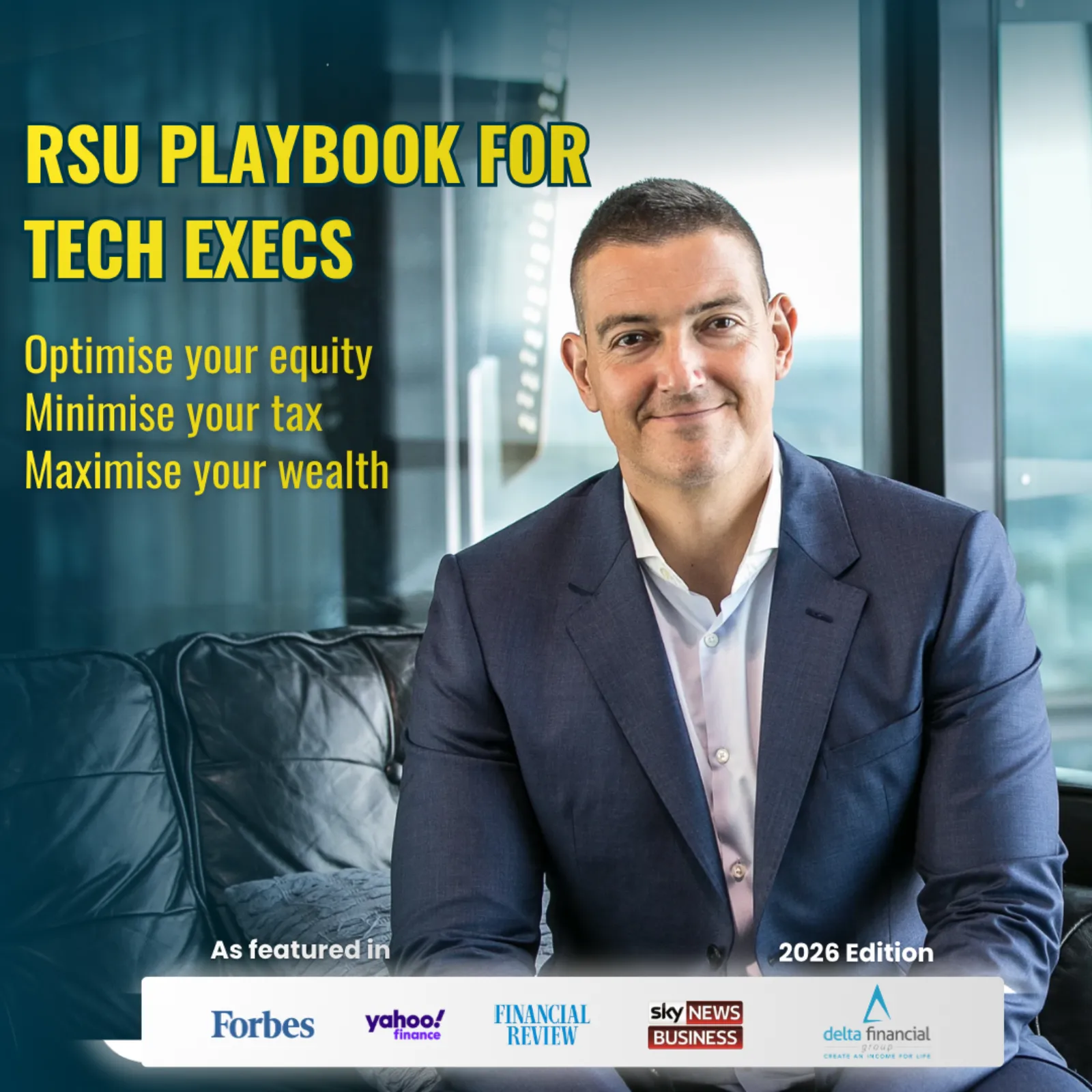
My free RSU Playbook covers the tax trap, the 33% rule and a multi year roadmap in detail. You can also watch my 2 minute video on RSU tax or read about my RSU advice service.
Or book a call below. We’ll look at your next vest together.
Create an income for life
Find out what your RSUs could be doing for you.
15 minutes. No cost, no obligation. Not ready yet? Start with the free RSU Playbook.